

The Seven Liberal Arts are the disciplines that represent the Knowledge in medieval times. They are opposed to the Mechanical Arts, or to all those practical activities that require manual skills, to which the least-skilled class was destined.
Their original classification dates back to the classical world and were intended to form the intellectual elite, clerics and monks. According to the practice developed in the Middle Ages, the Seven Liberal Arts are divided into two levels of teaching: Trivio, comprising grammar, rhetoric and dialectics, and Quadrivio, that is, arithmetic, geometry, music and astronomy.
In Bolaffi multiples of art you can find both degrees, all entrusted to different artists.
The Seven Free Bolaffi Arts: The Trivial
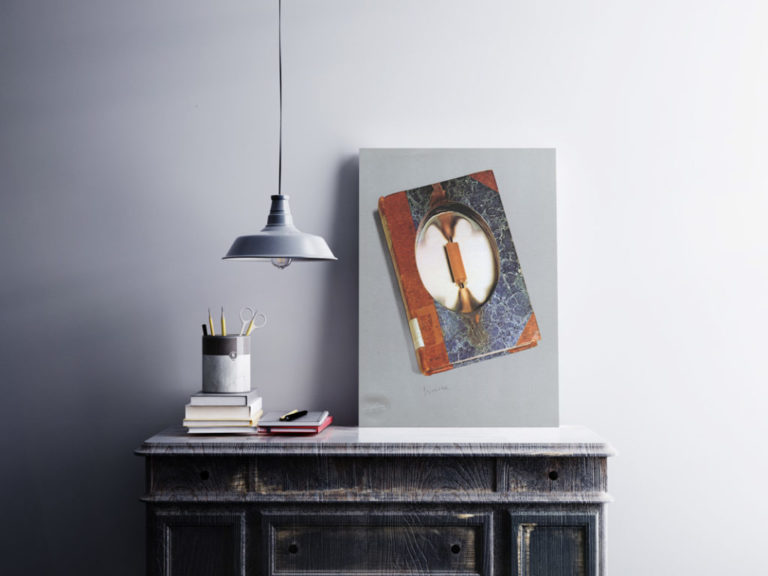
The Trivial Arts are all edited in 1979. Hubertus Gojowczyk wrote Grammar. The polish artist, Beuys student in Düsseldorf, uses one of his famous book-objects to transform the intellectual into physics.
Floriano Bodini, lombard sculptor, represents Rhetoric through an imposing figure, built from full volumes, delightfully defined by a sundial light.

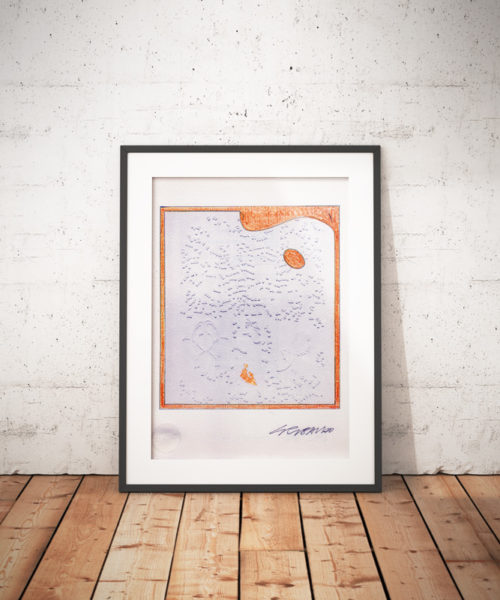
The Turin artist Ezio Gribaudo, finally, waves the signs and symbols of his peculiar scriptures in a frame of the Cartographic flavor for Dialectics.
The Seven Free Bolaffi Arts: the Quadrivio
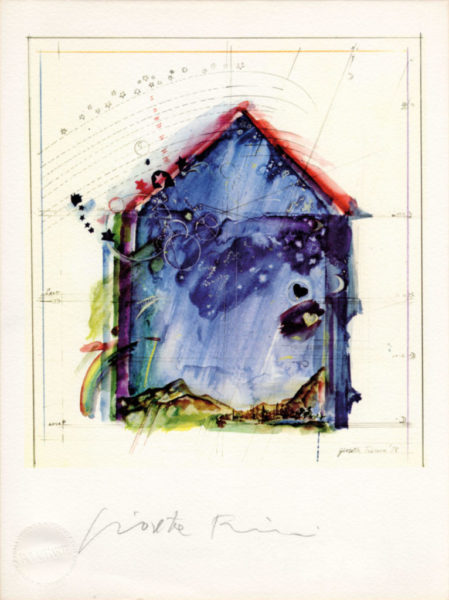
Quadrivio’s Arts see the presence of the only woman who participates in the production of this series of art multiples, namely the roman artist Giosetta Fioroni. In her 1978 Astronomy, the colors are kept loose from the central house, which is surrounded by graphic signs.

The multifaceted French artist, Roland Topor, known for his disheartening irony, imagines a grotesque and arrogant picture for Arithmetic (1978).

For the sicilian painter and engraver, Piero Guccione, geometry looks like a contrast between blue and yellow, while for Giuliano Vangi, music is represented by one of his peculiar male characters, an attoned and monochrome player, in precarious balance on a slope .